

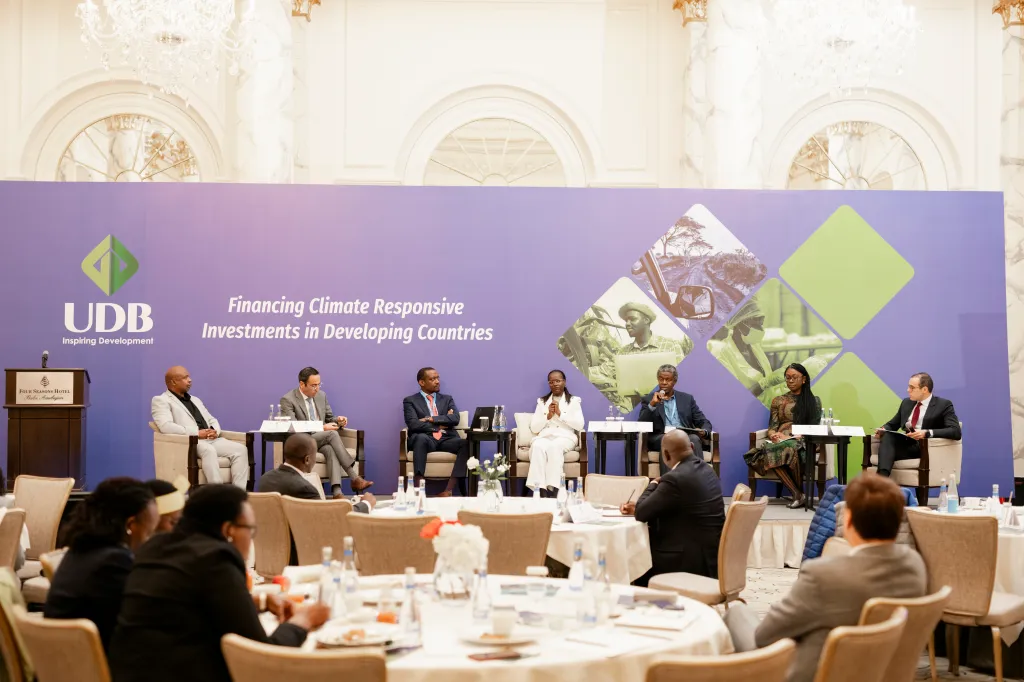
Uganda Development Bank (UDB) took part in the recently concluded COP29 – the annual UN Climate Summit – held in Baku, Azerbaijan. This year, the focus at COP was on how to make finance available to developing countries for climate action.
Joshua Allan Mwesiga, the Director Strategy & Corporate Affairs at UDB was part of the delegation that represented the Bank at COP29. He reflects….
Opportunities at COP
“As the country’s premier development financial institution, UDB plays a pivotal role in conceptualizing and implementing interventions to address critical gaps and challenges in our economy. One of the most pressing and evolving threats we face is the climate crisis. Its impacts are increasingly evident through events such as floods, landslides and droughts, which have significantly affected our nation and the economy.
Our resilience to climate shocks remains constrained, therefore highlighting the urgency for joint action. Events like COP provide invaluable opportunities to unite stakeholders, share experiences, exchange ideas, and forge impactful collaborations that address climate risks and pave the way for meaningful solutions”
Why UDB participated…
“It was essential for the Bank to participate—to forge meaningful partnerships, gain valuable insights, and accelerate our access to climate finance. More importantly, it was an opportunity to collaborate, explore innovative and pragmatic approaches to climate action, and reinforce our commitment to driving impactful climate solutions for the country.
It is widely acknowledged that the situation is deteriorating, with the gap between the funding needed to address climate risks growing ever wider.
Although funding exists, Africa is not receiving its fair share of these resources. This disparity is especially glaring when considering the funding required to meet nationally determined contributions, a gap that continues to widen with each passing year.
At UDB, we are actively pursuing accreditation so as to enable us access various green financing platforms. While the procedural requirements have somewhat made access challenging in the past, thanks to the productive engagements we had during COP, we have now realized tremendous progress.”
ALSO READ: Uganda Development Bank hosts high-level meeting on climate finance at COP 29
Regarding collaboration
“Collaboration in the green space isn’t just important, t’s a game-changer. No single entity can address the complexities of climate action alone. Achieving meaningful impact requires unified efforts across the entire spectrum—from policy and intervention design to securing and deploying funding, and rigorously monitoring outcomes. True success comes from collective action, ensuring our climate initiatives ensuring that our climate initiatives deliver tangible, lasting and transformative results.”

Move to programmatic approach
“Interventions that are project-based only scratch the surface. We need to be looking at climate action from a programmatic lens. For example, in areas prone to shocks like floods and landslides, we should focus on localised, long-term solutions rather than short-term emergency responses.
The question we need to ask is: what comprehensive, systemic, programmatic strategies can we implement to avert such crises and build resilience within these vulnerable communities?”
Deliberate action
“Many institutions often achieve climate goals unintentionally. For instance, they might adopt a technology that reduces printing and then claim success in saving trees—without having set out to reduce their carbon footprint in the first place.
This highlights the critical need for deliberate, climate-smart, and climate-conscious investments. Real progress comes from intentional strategies that prioritize and optimise sustainable practices, and proactively contribute to mitigating climate change, rather than relying on incidental outcomes.”
Engagements at COP29
“COP brought tremendous value. As mentioned earlier, we are actively pursuing accreditation with the Green Funds, which will unlock critical funding for green finance at the Bank. Additionally, we built key partnerships with organizations that have committed to walking this journey with us, further strengthening our efforts to drive sustainable change.

The Bank has exciting initiatives in the pipeline, for instance in waste management and mass transport. During our engagement at COP, we engaged with potential partners who are eager to collaborate with us—both in the design and co-funding of these transformative programs.
Had we not participated in COP and shared our vision, these opportunities wouldn’t have materialized. The UDB Breakfast Roundtable Discussion at COP29 played a pivotal role in demonstrating our credibility as a key actor in the climate finance space.
UDB credited for its bold steps
“At COP29, almost all the entities we engaged with lauded UDB for two key reasons: first, our bold initiative to establish an internal green finance facility; and second, the maturity of our climate finance strategy, function and operations, noting our green taxonomy, well-established policies and procedures, and robust tools for greenhouse gas accounting. Many were truly impressed by the progress the Bank has made on this journey thus far”
Integrate carbon credits
“The area of carbon credits is something we need to explore, both for ourselves in terms of our business model, and the clients we finance. Many clients are involved in projects that result in carbon sequestration (the process of capturing and storing carbon dioxide from the atmosphere, which is part of the natural carbon cycle). But they are not compensated for their efforts. Such funding is available, but the opportunities are unclear, and access remains uncertain. The information on how to tap into these resources is not readily available.
Africa must take action now
“Finally, it’s important to recognize that while we may not yet be experiencing the full brunt of climate risks, we remain quite vulnerable, as we are not resilient enough to effectively address these challenges.
Now is the time to act. We must transform the way we do business, embracing climate-resilient and climate-conscious technologies. This also means moving away from simple but harmful practices, like littering plastic bottles and bags in the drain. It starts with each one of us as individuals, and from there, it spreads to the broader community and the nation.”